Pre Columbian Art Museum Cusco Our Lady Mary Painting
The Virgin Mary: Fine art, Materiality, and Piety
Curated by Daniel Ymbong
The establishment of the Spanish viceroyalties ushered in the cosmos of new pop devotions and fine art production depicting the Virgin Mary in the Americas in the Early on Modern menses. The great demand for Marian images beginning in the sixteenth century led to the institution of artists' guilds, workshops, and schools, which produced artworks to adorn public and private spaces. Marian images and devotions became role of the diverse visual cultures in Latin America, informing the daily lives of populations in colonial Mexico and Republic of peru, so much so that the devotion to Mary would inspire revolution and continue to permeate present-day spirituality and identity in Latin America. This miniature exhibition explores the origins, diaspora, and transformations of Marian iconography from the IMAS Permanent Collection that are available to be experienced here in the Rio Grande Valley.
European images including included sculptures, paintings, prints, and jewelry incorporated pendants, rosaries, and scapulars from the Early Modern and Baroque periods. Marian devotions included these references in images with universal titles such as: the Virgin and Child with St. John the Baptist, the Virgin of Sorrows, the Virgin of the Rosary, the Virgin of Mount Carmel, the Immaculate Conception, the Supposition, the Coronation, the Virgin of the Candlemas, the Pietà, the Virgin of Light, the Virgin of Mercy, and the Virgin of Loreto.
Unique Iberian devotions included: the Virgin of Confinement, the Virgin of Guadalupe Extremadura, the Virgin of the Rule, the Virgin of the Pillar, the Virgin of Remedies, the Virgin of Montserrat, the Divine Shepherdess, Our Lady of Arantzau and the child Mary depicted in her life and death. Religious orders commissioned specific Marian works, naming their organizations as tribute. These included the Carmelites' Virgin of Mountain Carmel, the Conceptionists' Virgin of the Immaculate Conception, and the Mercedarians' Virgin of Mercy.
Both artists and artisans creatively reproduced and reinterpreted the large corpus of European Marian devotions. Their interpretations of the Virgin created new and localized hybrid forms, which were unique to the Spanish viceroyalties. Cultural norms such as race, pilus, garment, accessories, medium, artistic genre, and inclusion of local flora, fauna, and animals are depicted in the images of Mary. Prominent examples of localized Marian devotions include the Virgin of Guadalupe in Mexico, the Virgin of Pomata in Peru, whose crown of multi-colored plumes are of Inca origin, and the winged Virgin of the Apocalypse throughout the Castilian colonial milieu. These Marian devotions display overt examples of both ethnic and European mestizaje (mixing), which contributed to local cultural expressions, negotiations, and inventions.
Of all the Marian devotions in the Spanish viceroyalties, the Virgin of Guadalupe established a cult presence. The Guadalupe appears of mix race with dark peel tonalities. She embodies Aztec iconography, axiomatic in her vestment's inclusion of quincunx flowers. Her center-split up hair and cinched sash are Aztec styles, referencing her place of appearance in Tepeyac that was one time the temple of the mother goddess Tonatzin.
Her supernatural apparition coupled with miraculous wonders, led to the production of endless images for churches, convents, schools, government palaces, and homes. Colonial artworks of Guadalupe in Bourbon United mexican states were sent to Spain and signed Pinxit Mexico (Painted in Mexico). Strict guidelines for reproduction was mandated by art guilds, workshops and schools. Entrepreneurial artists and artisans in Republic of peru like the Cuzco School fashioned their own versions of the Guadalupe, incorporating gold-leaf rendering to emulate brocade. The Cuzco Schoolhouse created artworks for export to Italy, and within the viceroyalty, to present-day Republic of colombia, Buenos Aires, and Republic of bolivia. Spanish colonial artworks also merged diverse mediums such as: feathers, silk, brocade, ivory, mother of pearl, Columbian emeralds, and Asian lacquer via the Manila Gaellons.
Colonists used these devotional images as visual displays of spiritual piety and storytelling. These images dictated said virtues of motherhood, domesticity, and purity for cloistered and secular women to emulate. Religious orders, churches, places, and people were named after the Virgen of Guadalupe. Originally, the Virgin of Guadalupe was venerated among creoles (Europeans born in the colonies) and later became the patroness of Mexico, the Americas, and the Philippines. Her veneration inspired a national resistance and independence from colonial rule in Mexico, which has greatly impacted contemporary Latinx identity in the borderlands and in Mexico and America also.
From Renaissance oil paintings, Baroque pyramidal cloaked sculptures, to stylized brightly colored ofrendas (altars) of Arte Popular (Popular Art) to the Rasquache kitsch reclamation of the Latinx vernacular, the Virgin Mary has and still is a circuitous visual symbol of mestizaje, organized religion, unity, resistance, artifice, culture, gender, and identity.
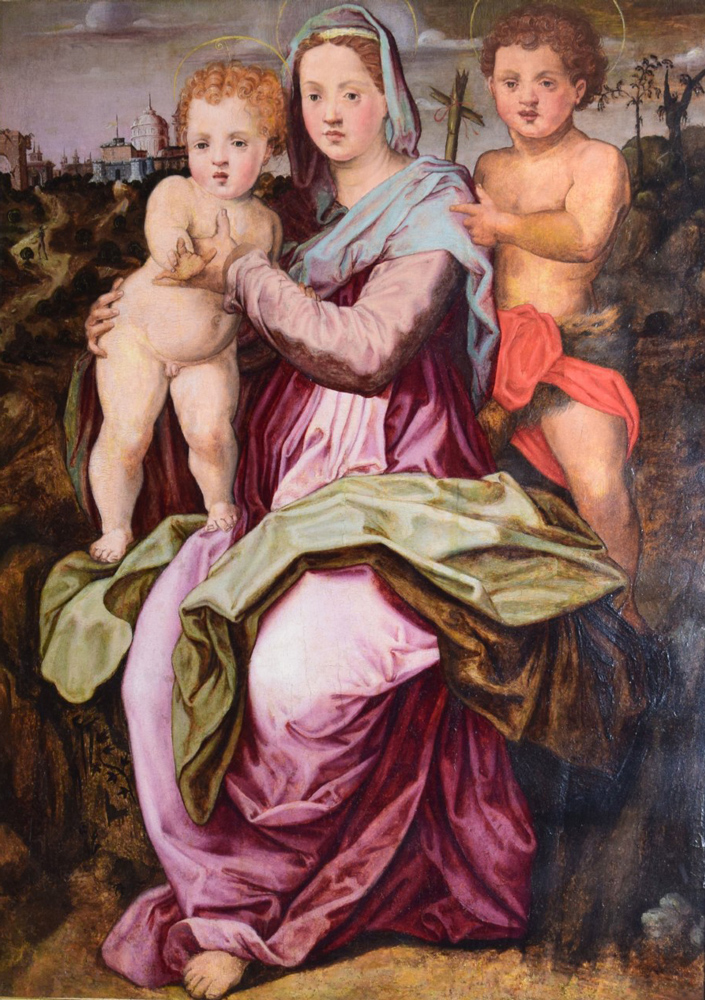
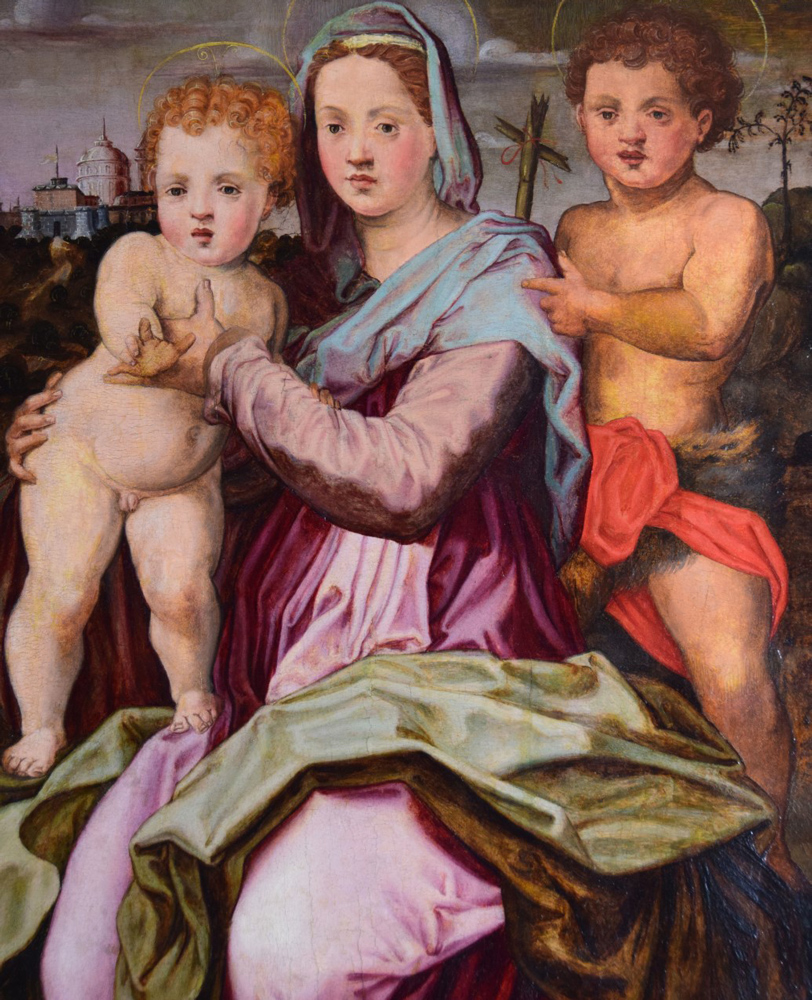
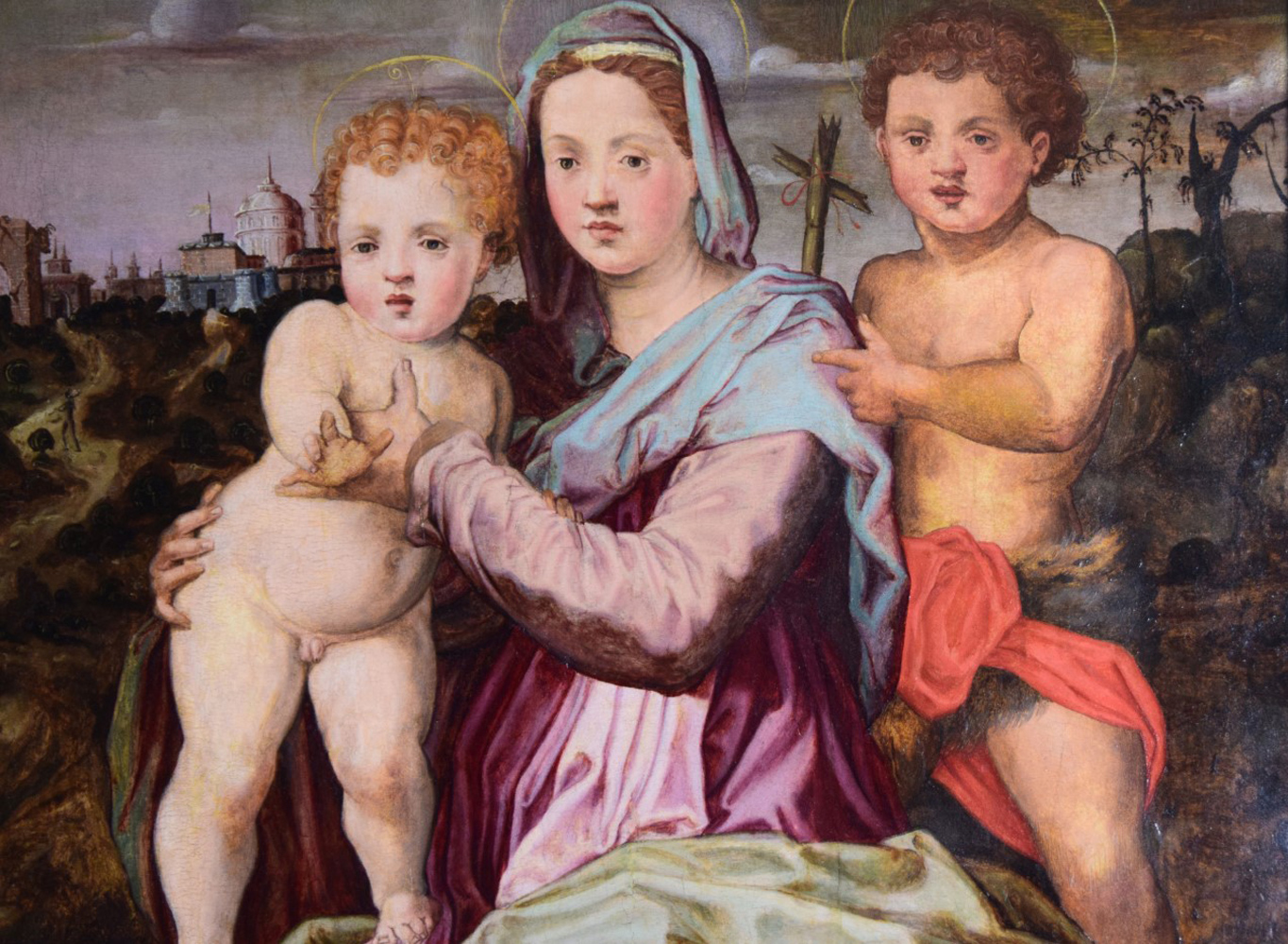
Madonna and Child with St. John
Spanish colonial artworks referenced Spanish, Flemish, and Italian images, such equally Mannerist paintings depicting the Virgin and Child swathed in pastel drapery with a crisp, paper-like rendering and elongated features. European artists likewise traveled to the viceroyalties. For example, the Italian Jesuit artist Bernardo Bitti (1548-1610) was sent to Republic of peru and lived as a missionary, producing a substantial body of Mannerist paintings on his travels throughout Peru. The painting in the IMAS presents a pastel colour palette and a complex composition reminiscent of the Mannerist period.
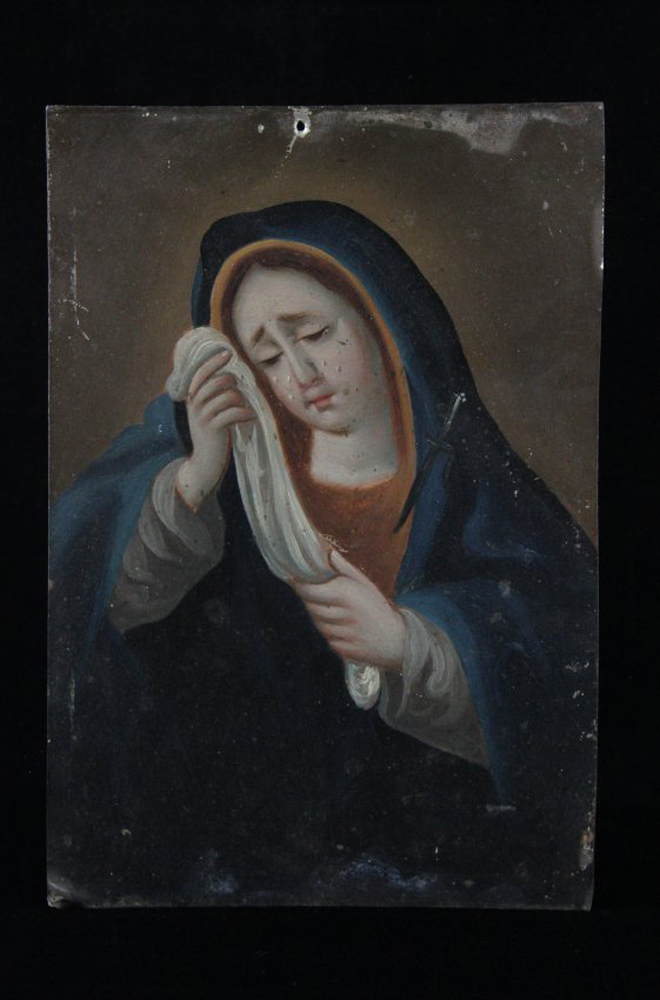
Retablo of the Sorrowful Female parent
Artists and artisans reproduced popular Marian devotions such every bit the Virgin of Sorrows, which followed European Baroque theatricality, naturalism, and a penchant for arcadian faces.
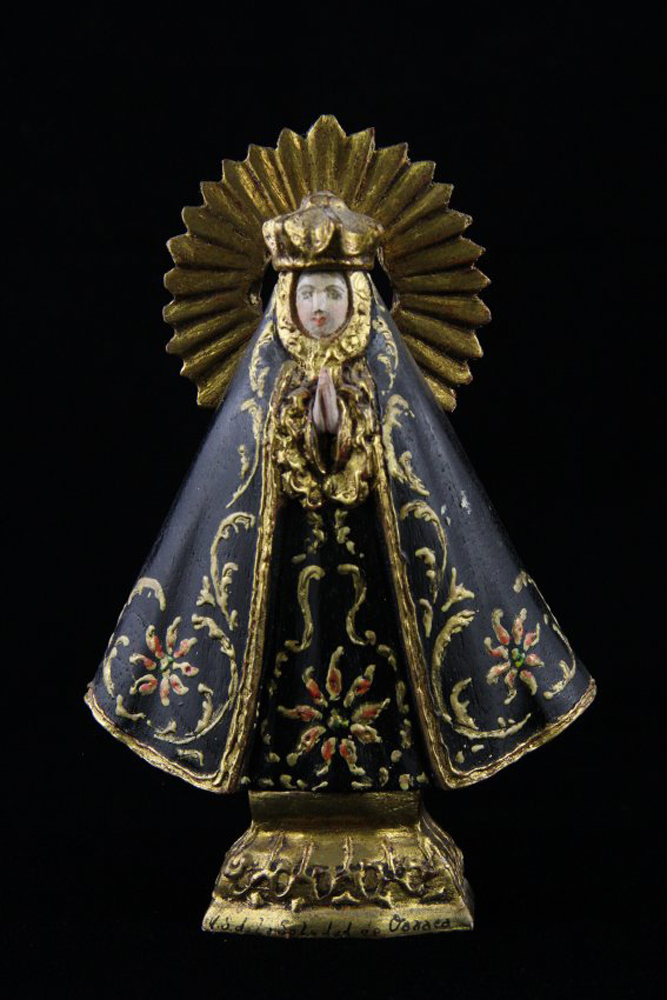
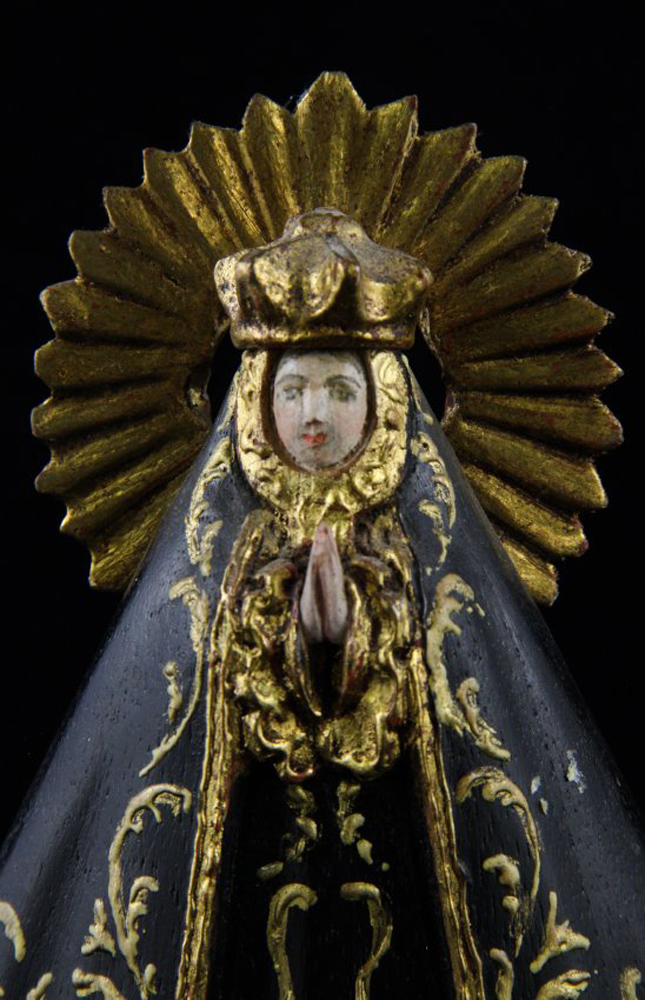
Our Lady of Solitude
Devotion to the Virgin of Solitude continued to manifest in the Spanish colonial Baroque menses in Mexico and Peru, showcasing shifts in style depicting the Virgin in triangular vestments with lavish ornamentation and arched diadems in sculptures.
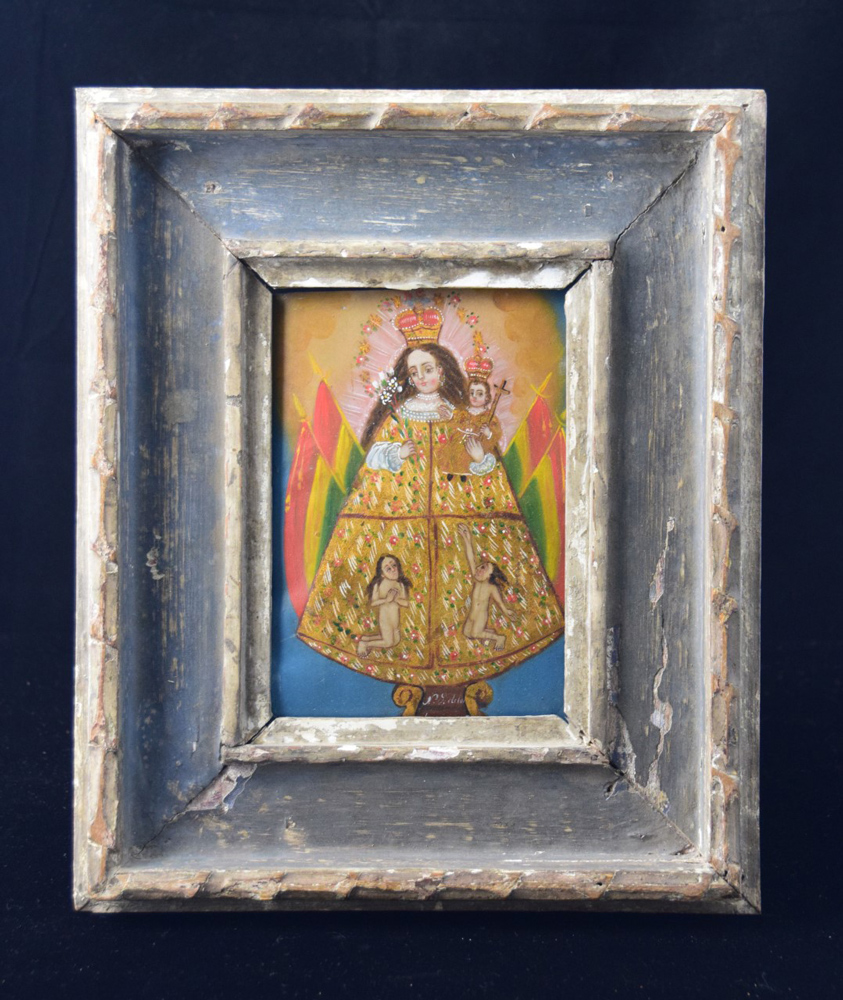
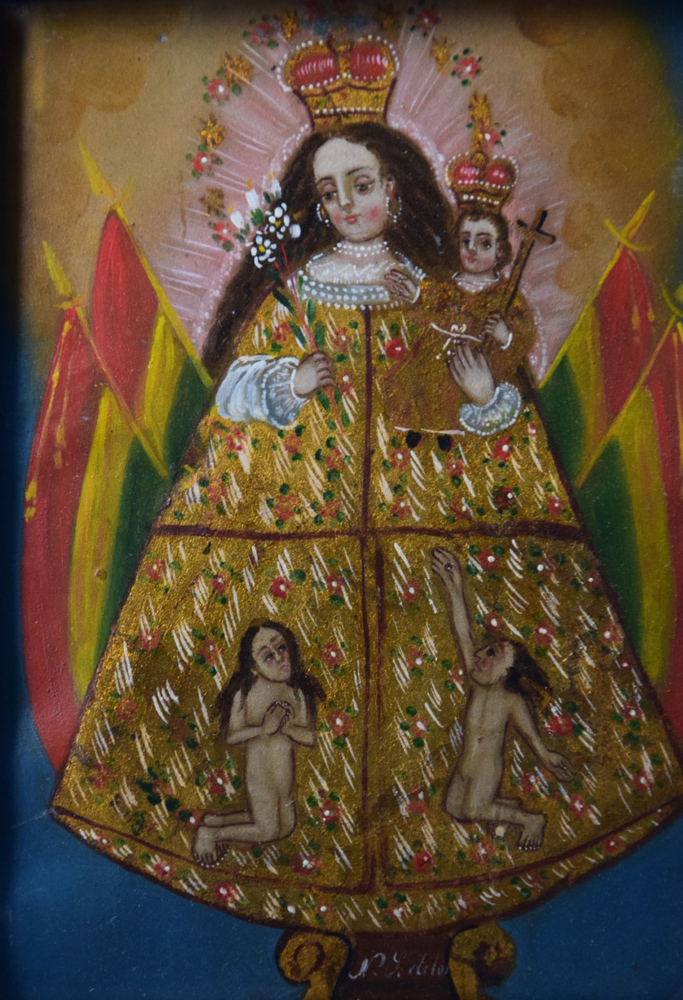
Virgin and Kid
Painted depictions of the triangular Virgin and Child in viceregal Republic of peru during the Baroque period featured a preference for brilliant color pallets in main colors, such as red indicating the Sacred Mountain and the Ancient Peruvian devotion to Pachamama. Kneeling nude figures pray and seek help from the Virgin in this depiction.
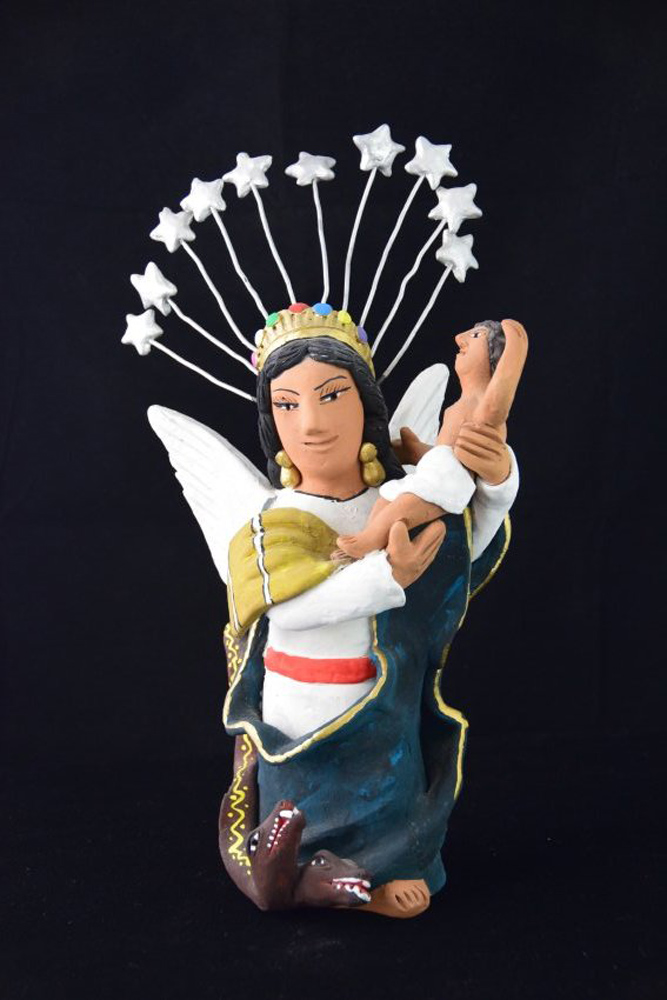
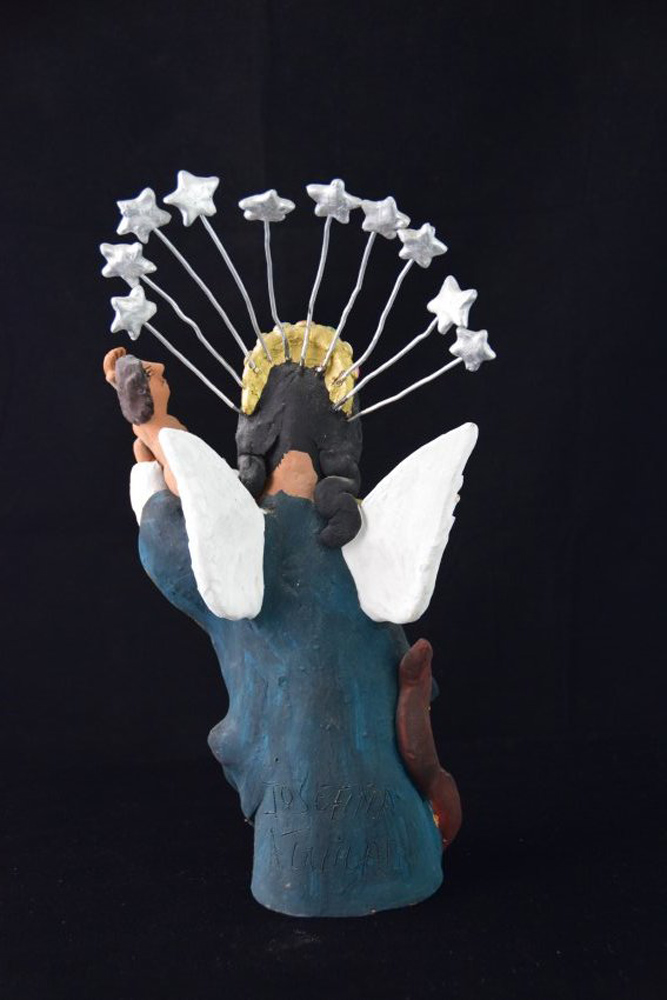
Virgin of the Apocalypse
Spanish colonial devotions such as the winged Virgin of the Apocalypse, which originated in the Baroque period, informed the work of contemporary Mexican folk artists, such equally Josefina Aguilar.
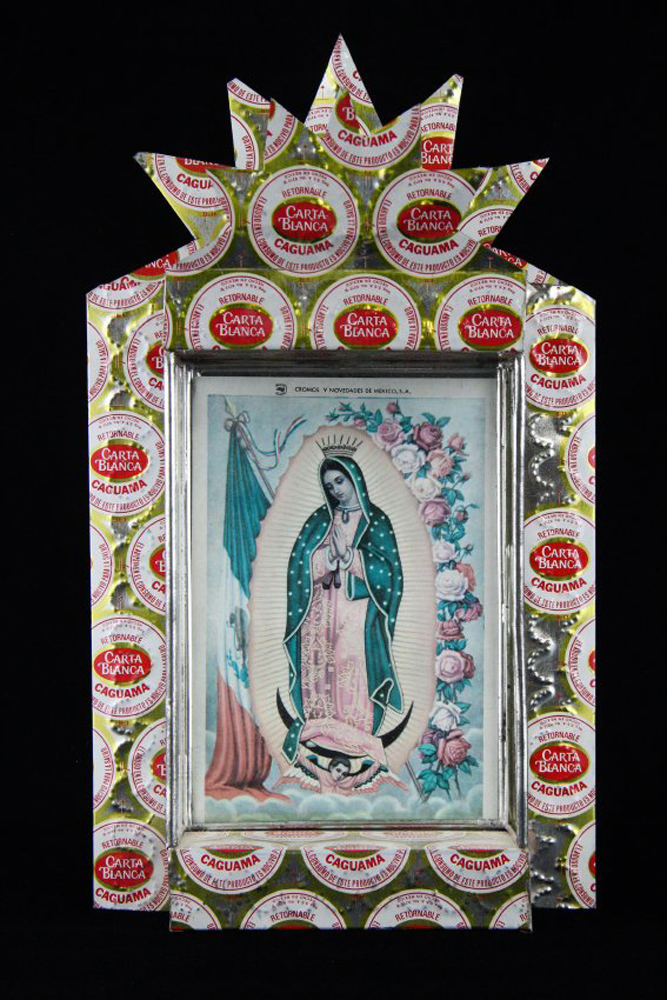
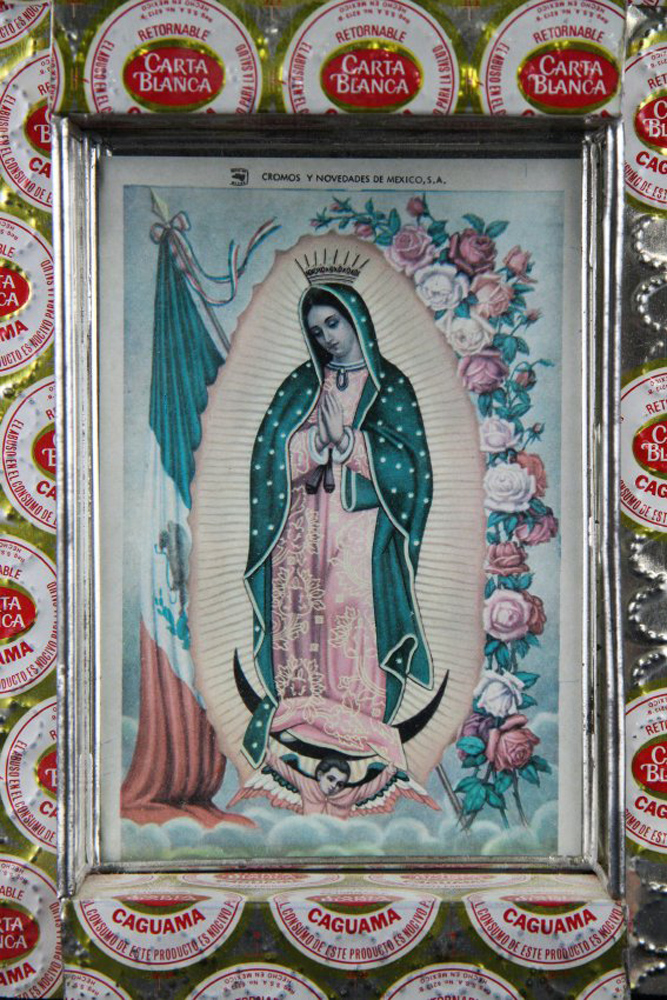
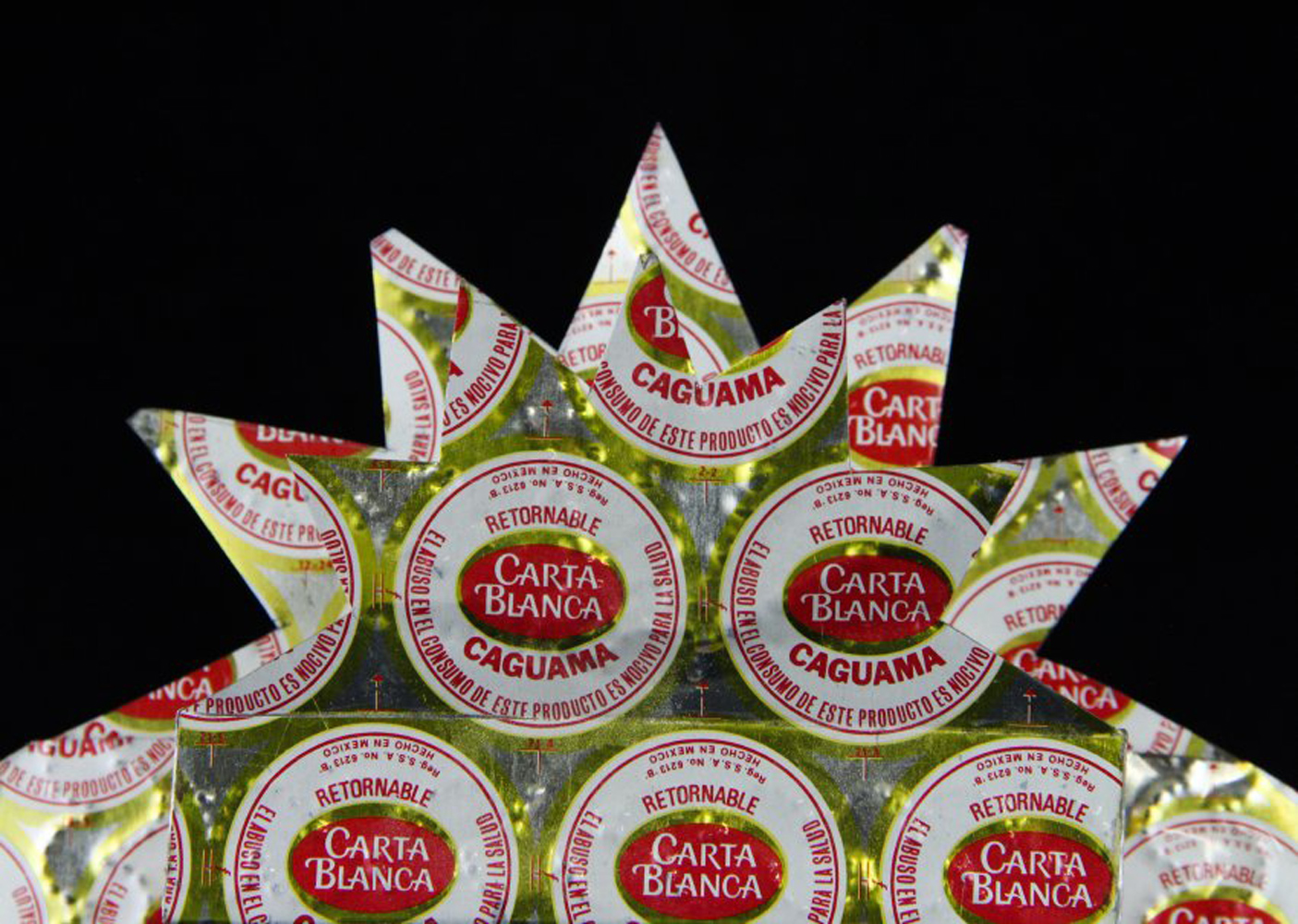
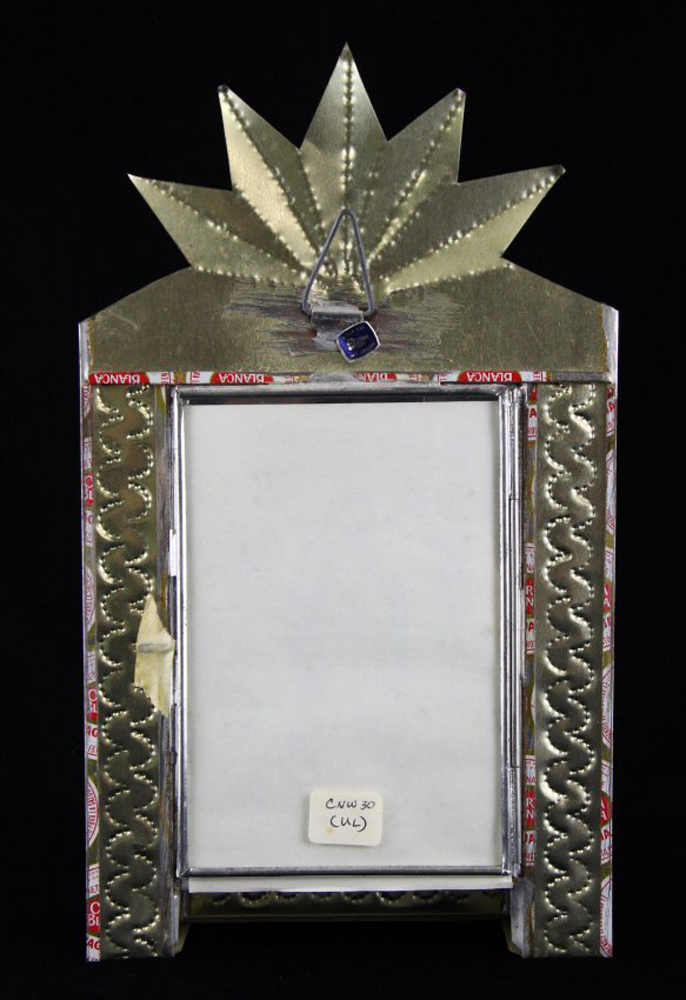
Carta Blanca Virgin of Guadalupe
The Guadalupe's influence continued to be instrumental in the Chicano (Mexican American) Motion which began in the 1960's, as artists juxtaposed Baroque iconography with commercial ready-made objects such as the Carta Blanca bottle caps equally a commentary on cultural consumption and identity.
Source: https://www.utrgv.edu/claa/exhibitions/virtual-exhibitions/daniel-ymbong/index.htm
0 Response to "Pre Columbian Art Museum Cusco Our Lady Mary Painting"
Enregistrer un commentaire