It happened abruptly. You got upwards from your chair and can't straighten your knee. Should you be alarmed? What does it mean when your human knee won't straighten? What are the 8 major causes of why y'all tin't straighten the knee? When should you exist concerned about not being able to straighten the knee? What are the handling options? Allow'south dig in.
What Does Information technology Mean When your Knee Won't Straighten?
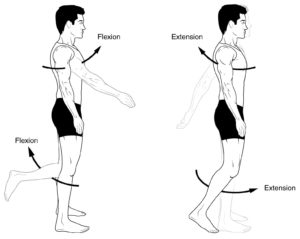
Your knee is capable of moving in a number of directions. The most common are flexion and extension. Flexion is when you curve your knee and the shin bone moves towards the buttock. Knee extension is when you straighten out your knee joint. The extension is the opposite of flexion. PT, trainers, and physicians alike measure the degree of knee flexion and extension. When lying flat on an examination table or hard surface your knee should be able to extend so that there is no angle between the thigh and shin bone. The disability to straighten the knee is likewise known as an extension lag and is a reason for business organisation.
What Are the Major Causes of Why I Can't Straighten the Knee?
Being unable to straighten your genu can be frightening. There are multiple factors involved in the motion of the human knee. The major causes of inability to straighten the human knee include.
Meniscus Tear
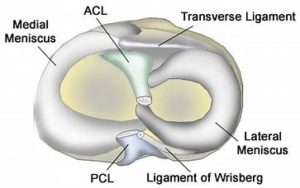
The meniscus is a C-shaped cushion situated between the thigh bone and shin bone. Each of u.s.a. has two menisci per knee. I on the within (medial) and one on the outside (lateral) of the knee. The meniscus functions as a daze cushion and joint stabilizer and is susceptible to injury. Meniscus tears are among the most mutual knee injuries. There are many different types of meniscus tears that are classified (ane). Examples include horizontal, vertical, complex, and flap tears. Chance factors for meniscus tears include advanced age, male gender, work-related kneeling, and climbing stairs (2). Injury to the meniscus tin can cause a number of symptoms which include:
Hurting
Swelling
Inability to straighten the knee
Quadriceps Tendon Injury
The quadriceps muscle is a powerful muscle located in the front of the thigh. It is actually equanimous of 4 different muscles which include the rectus femoris, vastis medius, lateralis, and intermedius. The quadriceps part every bit a powerful extensor of the knee. Tendons are thick pieces of connective tissue that connect the muscle to bone. The quadriceps muscle is susceptible to injury. Common causes of injury include age over 40 years, steroid utilise, chronic and repetitive human knee injections (3). Quadriceps tendon injuries typically produce anterior knee joint hurting (four). It can also prevent you from straightening your knee joint.
Patella Tendon Injury
The patella tendon is a thick slice of connective tissue that connects the kneecap (patella) to the shin os. It is important in stabilizing the human knee cap and genu extension. Injuries occur in athletes who participate in jumping and running sports. Injury to the patellar tendon can cause patients to mutter that they can non straighten their knees.
ACL Injury
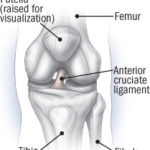
The inductive cruciate ligament (ACL) is a key stabilizer of the knee. The ligament extends from the thigh os (femur) to the shin bone (tibia) and limits forrard and rotational motility of the knee. Tears in the ACL tin occur every bit a issue of trauma, and rapid pivoting and cutting movements. ACL tears business relationship for 64% of athletic human knee injuries in pivoting sports resulting in 120,000- 200,000 ACL reconstructions annually in the U.s.a. (5). At that place are numerous signs and symptoms of an ACL tear. Symptoms may vary from patient to patient. The most common ones are:
Pain
Rapid swelling
inability to straighten the human knee
Acute Injury with Swelling
Injury to the knee can cause swelling. This is as well called fluid on the knee. This swelling tin can significantly reduce knee motion. If severe, the swelling tin crusade the inability to straighten the articulatio genus.
Osteoarthritis/Bone Spur
A bone spur is the growth of additional bone along the edges of a joint. Information technology is as well called an osteophyte. Bone spurs develop as a consequence of trauma, instability, and arthritis. If large plenty they can forbid the human knee from straightening. Bone spurs can crusade a concrete block to full articulatio genus extension.
Patella or Kneecap Dislocations
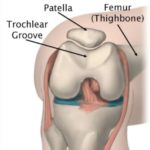
The kneecap is intended to slide smoothly upward and downward the boney groove in the thigh bone. The groove is called the trochlear groove. If the knee cap becomes dislocated from this boney groove it can cause patients to complain that they tin't straighten the human knee. The annual incidence of primary patellar dislocation is v.8 per 100 000 in the full general population (half-dozen). This occurs nearly frequently in the 10- to 17-twelvemonth age grouping. Causes of kneecap dislocations include trauma, weak muscles, and the female gender.
Muscle Imbalance
The body is a miraculous organisation. It requires synchronized movements between muscles, tendons, and ligaments. If musculus imbalance occurs the organisation can interruption downwardly. The muscles in the lower legs must work together to allow full flexion and extension of the knee. If the hamstrings become chronically tight and the quadriceps are weak it may be challenging or difficult to straighten your knee.
When Should I be Concerned About Not Being Able to Straighten Knee?
A unmarried episode where you tin can't straighten the genu that is non associated with other symptoms typically does not warrant concern or further evaluation. Multiple episodes of non being able to straighten your knee joint warrant further evaluation. Who should evaluate the clicking in your human knee? Featherbed your surgeon and schedule a consultation with a doc trained in Interventional Orthopedics. Surgeons provide surgical solutions that are non always in your best interest. What is Interventional Orthopedics? Information technology is a lath-certified physician in PM& R or anesthesia with advanced orthopedic training with nonsurgical handling options. They use orthobiologics to heal injured orthopedic tissue. Orthobioligcs are biological substances naturally found in the trunk that are used to promote quicker healing of muscle, tendon, and bone injuries. To learn more please click on the video below.
What Are the Treatment Options?
Identifying the underlying crusade of why y'all can non straighten your knee volition provide the best clinical results. Conservative therapy when appropriate is always the starting time line of treatment.
Meniscus tear
Non all meniscus tears are painful. In fact, in ane study sixty% of patients without pain had meniscus tears on MRI. PRP is effective in the treatment of meniscus tears. Steroids should exist avoided equally they are toxic. Meniscus surgery has been demonstrated to exist no better than PT (vii). In improver, information technology increases the risk of human knee instability and arthritis. To learn more about the treatment of meniscus tears please click on the video beneath.
Osteoarthritis
Osteoarthritis is the most common form of arthritis. Information technology is a articulation disease where the cartilage that lines and protects the joint gradually wears down resulting in pain, swelling, and restriction in motion. Approximately thirteen% of women and 10% of men aged 60 years and older have symptomatic genu osteoarthritis (viii). Risk factors for knee osteoarthritis include obesity, female gender, repetitive knee trauma, muscle weakness, squatting, and meniscus injuries (nine). Loss of cartilage and os spur formation tin can both result in y'all not being able to straighten your genu.
ACL Injuries
The Centeno-Schultz Clinic physicians are experts in the treatment of ligament injuries. Nosotros pioneered the utilize of bone marrow stem cells in the nonsurgical handling of ACL tears allowing patients to forgo the risks and complications of traditional ACL graft surgery. The risks of the ACL graft surgery are significant and include a 6x'southward adventure of re-tear within 24 months post-surgery (7) and development of arthritis (8). To learn more about the not-surgical treatment of ACL injuries delight click on the video beneath.
Patellar and Quadriceps Tendon Injuries
Patellar and Quadriceps tendon injuries are hands visualized with ultrasound. The specific type and location of the injury tin can be identified. Treatment options include PRP or stalk prison cell injections depending upon the severity of the injury.
Take a deeper dive here:
ACL Tears
The Inductive Cruciate Ligament (ACL) is one of 4 major ligaments in the human knee. Information technology is an important stabilizer of the human knee and prevents the shin bone (tibia) from sliding in front end of the thigh bone (femur). The ACL is susceptible to injury. Information technology is near probable to be injured during activity or by touch on. A torn ACL is a common injury for athletes at all levels, but it is almost common for people who are active or who feel affect injuries to the knee. ACL injuries can happen to anyone of whatsoever historic period, condition, or power, and it can exist injured in many ways. Examples include abruptly changing direction, slowing downwards while running, landing incorrectly, or getting struck by someone or some object.
Read More About ACL Tears
Baker's Cyst
A Bakery'due south cyst can cause knee hurting. A Baker cyst is swelling caused by fluid from the genu joint protruding to the back of the knee. They are Non a true cyst since it has advice with the synovial sac. They typically arise from degenerative changes or injury to the articular cartilage (arthritis) or meniscus. At the Centeno-Schultz Clinic, we believe that baker'due south Cysts are just a barometer of the wellness of the knee joint. In a healthy genu, there are absent whereas with injury and degenerative changes they are mutual. They ascend betwixt the tendons of the medial head…
Read More About Baker's Cyst
Iliotibial Ring Syndrome (ITB)
Also known as "It Band Syndrome" as well known as "ITB Syndrome," iliotibial band syndrome is a painful medical condition that affects the lateral hip, leg, and knee. It tin can bear upon individuals of all ages and most often is caused by repetitive activities like running, cycling, hiking, and walking. Your iliotibial band is a thick band of connective tissue that runs from the outside of your hip down to the outside aspect of your knee. Its chief role is to stabilize the hip and genu. If information technology becomes tight and dysfunctional, you lot may experience pain along with this band of tissue due to strain or inflammation. You may likewise experience pain, express range of motion in…
Read More About Iliotibial Band Syndrome (ITB)
Knee Arthritis
In the homo torso, a joint is simply where two ends of bone come together. At the ends of these basic, there is a thick substance called "Hyaline Cartilage" that lines the ends. Hyaline cartilage is extremely glace which allows the two ends of the bone to slide on summit of each other. Then in that location is a capsule that connects the two ends filled with "synovial fluid" that acts as a farther lubricant to make information technology more than slippery! Arthritis in the knee is defined by loss of the hyaline cartilage plus other changes that happen to the bone such equally additional os being laid down (bone spurs/osteophytes). The cartilage layer is worn down to the point of exposing the underlying bone they comprehend…
Read More than Virtually Knee Arthritis
MCL tear
The medial collateral ligament AKA MCL is a thick, stiff band of connective tissue on the inside portion of your knee. It connects the top office of the tibia (shin) to the bottom part of the femur (thigh). This is a vital ligament that works along the lateral collateral ligament (LCL), anterior cruciate ligament (ACL), and posterior cruciate ligament (PCL) to bring stability, structure, and movement to the knee. The MCL provides support and stability for the inside (medial) aspect of the articulatio genus. MCL tears are a common injury in sports such as football, hockey, and skiing. The ligament tin…
Read More About MCL tear
Meniscus Tears
The meniscus is a c-shaped slice of cartilage in the knee that functions as an important shock absorber. It is sandwiched between the thigh and shin os. There are two menisci per knee. One on the inside portion of the knee (medial) one on the outside attribute (lateral). The knee meniscus is susceptible to injury. The most common injury is a tear in the meniscus. Not all meniscus tears however cause pain. When symptomatic a meniscus tear tin can crusade pain, swelling, and brake in range of motility. Tears in the knee meniscus can arise from trauma or degeneration. In that location are many unlike types of meniscus tears based upon locations….
Read More About Meniscus Tears
Evidence More
In Conclusion
Flexion and extension are normal knee motions. There are seven major causes that foreclose your knee from straightening. These include meniscus tears, quadriceps tendon injury, patellar tendon injury, ACL injury, acute swelling, osteoarthritis, patellar dislocation, and muscle imbalance. Multiple episodes of disability to straighten your genu warrants business concern and evaluation. Surgeons provide surgical solutions that are not ever in your best interest. A physician trained in Interventional Orthopedics tin provide you with the best nonsurgical, non-steroid treatment options. Identifying the underlying cause is critical for the best clinical results. The Centeno-Schultz Clinic physicians are experts in the treatment of human knee injuries. Handling options include PRP and stem cell injections.
Being unable to straighten your knee joint is a warning sign. Deed now before the trouble gets bigger and the options are express. Schedule a Telemedicine consult with a lath-certified doc who can review your history, studies, and provide you with the best nonsurgical treatment selection. Listen to your body as it is alarm you!
i. Mordecai SC, Al-Hadithy N, Ware HE, Gupte CM. Handling of meniscal tears: An evidence based arroyo. Earth J Orthop. 2014;5(3):233-241. Published 2014 Jul 18. doi:x.5312/wjo.v5.i3.233.
two.Snoeker BAM, Bakker EWP, Kegel CAT, Lucas C. Risk factors for meniscal tears: a systematic review including meta-assay. J Orthop Sports Phys Ther 2013;43:352-367.
3.Flanigan D.C., Troyer J., Everhart J.Due south., Uribe J.W., Wherley E., Yagnik G.P. (2017) Extensor Machinery Injuries: Quadriceps and Patellar Tendon Ruptures. In: Eltorai A., Eberson C., Daniels A. (eds) Orthopedic Surgery Clerkship. Springer, Cham. https://doi.org/10.1007/978-3-319-52567-9_68
4.King D, Yakubek M, Chughtai G, et al. Quadriceps tendinopathy: a review, office 2-nomenclature, prognosis, and treatment. Ann Transl Med. 2019;7(4):72. doi:10.21037/atm.2019.01.63
five.. Kim Southward, Bosque J, Meehan JP, Jamali A, Marder R. Increase in outpatient knee arthroscopy in the United states of america: a comparison of National Surveys of Convalescent Surgery, 1996 and 2006. J Bone Joint Surg Am. 2011;93(xi):994-1000.DOI: 10.2106/JBJS.I.01618.
vi.Jain NP, Khan N, Fithian DC. A treatment algorithm for primary patellar dislocations. Sports Health. 2011;3(2):170-174. doi:x.1177/1941738111399237.
7.Collins JE, Losina Due east, Marx RG, et al. Early Magnetic Resonance Imaging-Based Changes in Patients With Meniscal Tear and Osteoarthritis: Eighteen-Calendar month Data From a Randomized Controlled Trial of Arthroscopic Partial Meniscectomy Versus Concrete Therapy. Arthritis Intendance Res (Hoboken). 2020;72(five):630-640. doi:10.1002/acr.23891
eight.Heidari B. Knee osteoarthritis prevalence, chance factors, pathogenesis and features: Part I. Caspian J Intern Med. 2011;two(2):205-212.
9.Yoshimura Northward, Muraki S, Oka H, Kawaguchi H, Nakamura K, Akune T. Association of knee joint osteoarthritis with the accumulation of metabolic risk factors such as overweight, hypertension, dyslipidemia, and impaired glucose tolerance in Japanese men and women: the ROAD study. J Rheumatol. 2011;38(v):921-930. doi:10.3899/jrheum.100569.
0 Response to "what does it mean to "extend" the knee joint?"
Enregistrer un commentaire